
Mary Sargent © 2010 ………………….…………… ………………….. click to enlarge
Standing on the eastern end of 14th Street at Avenue C, there's nowhere to go that makes sense but back where I came from.
Across the street is a view.of a corner of Stuyvesant Town, looking like any other housing project. There are 35 of these buildings, containing 8,757 apartments, making this development much larger than an Illinois town I once lived in with a population of 7,000. That was a grim two years of my life, and I imagine living here would be equally grim. For me, anyway. I know it has its fans.
Please enlarge the map below to get an idea of how truly huge it is. You have to click the View Larger Map link and then click the plus sign a few times. I know it's a few steps more than you want to take, but believe me, it's worth it.
View Larger Map
Tuesday, August 31, 2010
East Village, Avenue C at 14th Street

East Village, Avenue C at 14th Street

Mary Sargent © 2010 ………………….…………… …..……………….. click to enlarge
My map shows 14th Street continuing to Avenue D and ending at the FDR Drive, so I was surprised to be stopped by the blue fence. I learned from a guard who stopped me from photographing behind the blue fence, that it was closed off for security reasons after 9/11.
Friday, August 27, 2010
East Village, 14th Street Between Avenues B and C

Mary Sargent © 2010 ………………….…………… ………..........………….. click to enlarge
I was taken by the rhythm of those cornices.

Mary Sargent © 2010 ………………….…………… ………………….. click to enlarge
Here's the straight-on shot.
See map.
Wednesday, August 25, 2010
East Village, 14th Street Between Avenues B and C

Mary Sargent © 2010 ………………….…………… ………………….. click to enlarge
This is a small piece of Stuyvesant Town, much in the news lately.
Friday, August 20, 2010
East Village, 14th Street Between Avenues A and B

Mary Sargent © 2010 ………………….…………… …….............…………….. click to enlarge
And sometimes it takes two people wearing turquoise shirts to make the picture.
Thursday, August 19, 2010
East Village, 14th Street Between Avenues A and B

Mary Sargent © 2010 ………………….…………… ……...................…………….. click to enlarge
I didn't know until tonight that these two stores plus the three adjoining were destroyed by a fire in May. It seems someone was installing a fire door (see the irony?) when his welding torch "apparently set some grease on fire." And now the neighbors lament the loss of the only good pizza in the East Village.
Wednesday, August 18, 2010
East Village, 14th Street at Avenue A

Mary Sargent © 2010 ………………….…………… ………………….. click to enlarge
Sometimes you just don't want people in a shot.
Back from Maine, and, you will not be surprised to hear, it was beautiful, the weather was blissful and the lobster was plentiful, cheap and good. We had boiled lobster, lobster salad, lobster rolls, lobster in a seafood pot pie, and lobster omelet. The last night, I had a steak and red wine. It was strangely satisfying.
Thursday, August 12, 2010
East Village, 14th Street Between First Avenue and Avenue A
X
X
Use your time well. Maybe browse the archives.
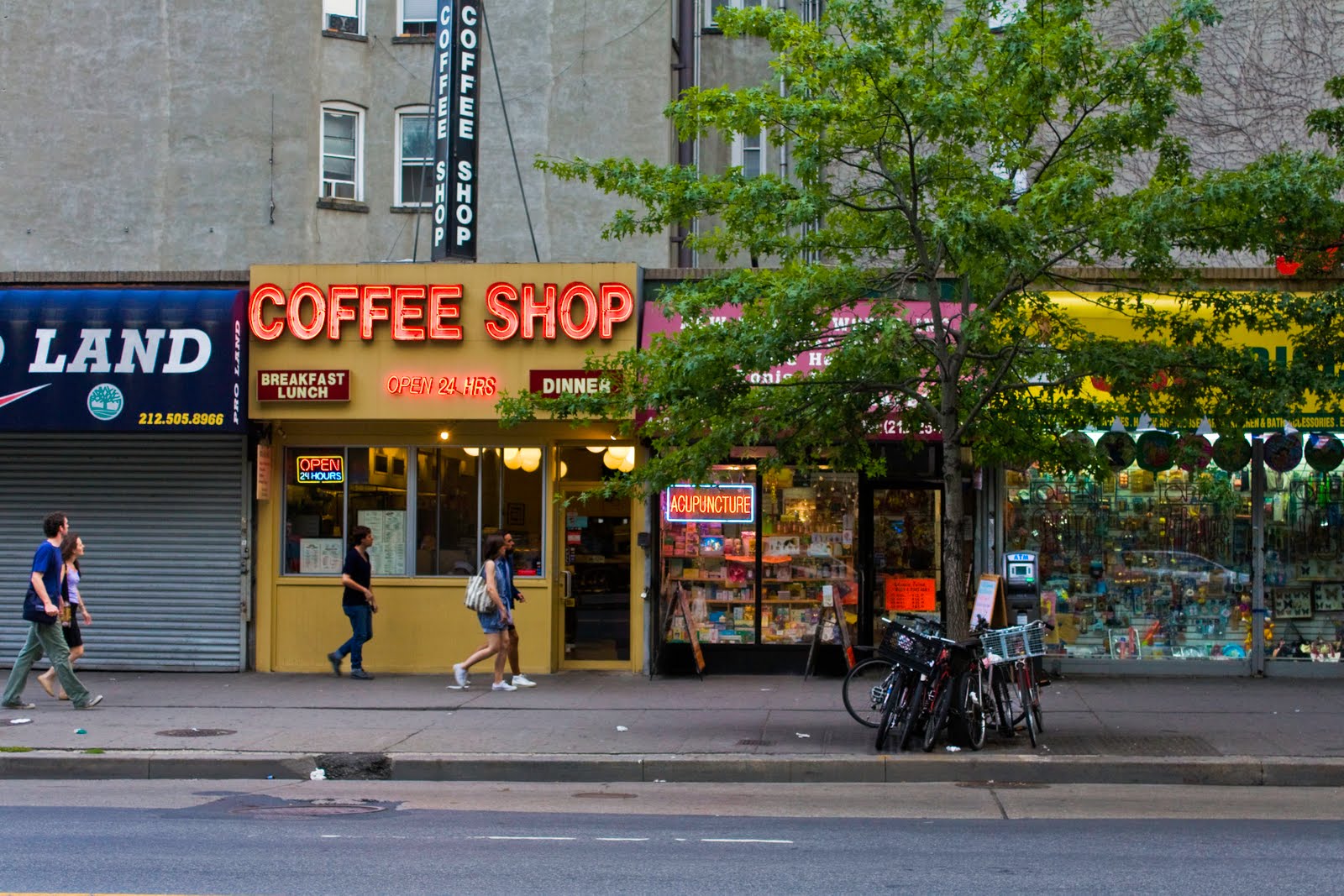
Mary Sargent © 2010 ………………….…………… …………........……….. click to enlarge
Tuesday, August 10, 2010
East Village, 14th Street Between First Avenue and Avenue A
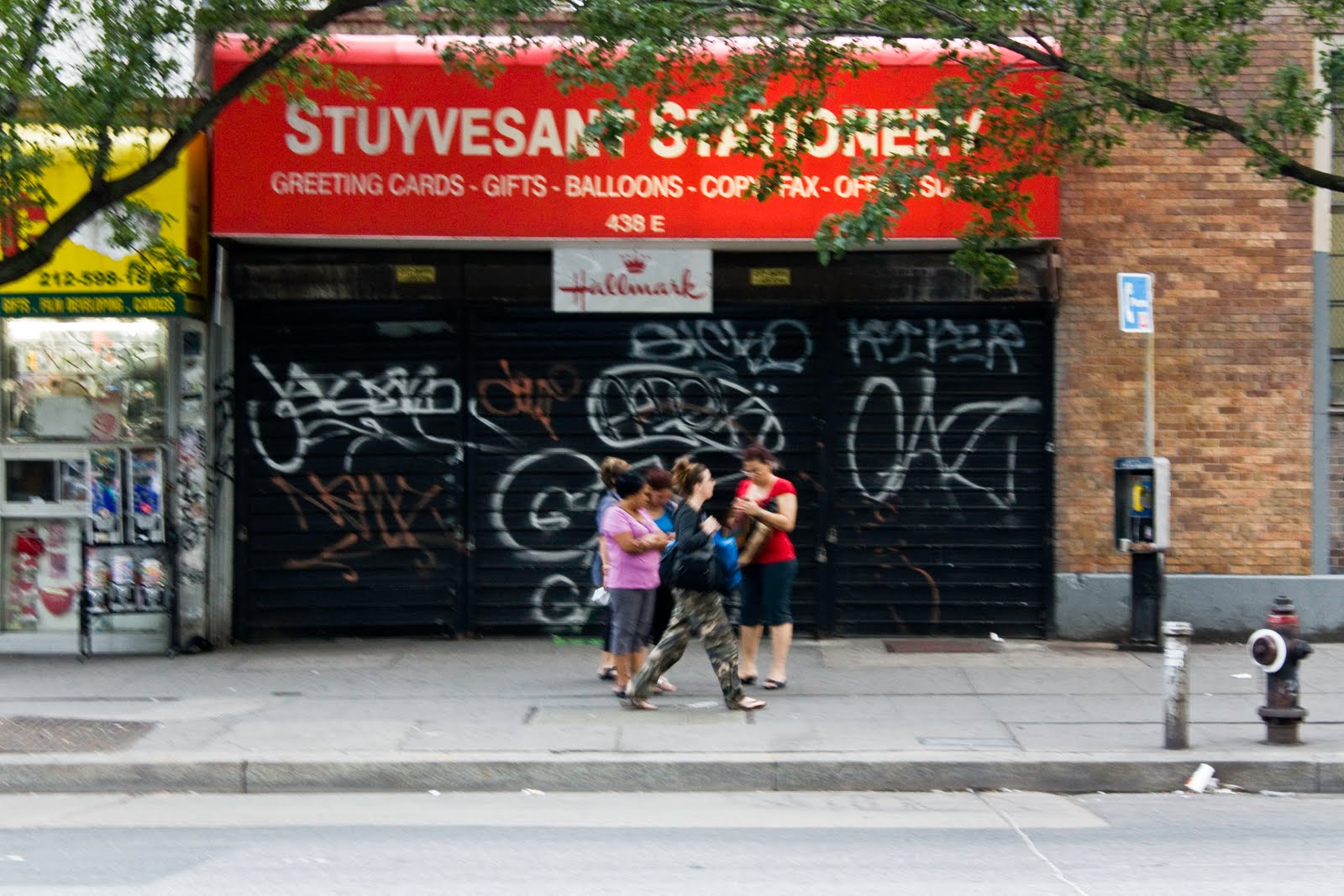
Mary Sargent © 2010 ………………….…………… …………….........…….. click to enlarge
A Hallmark card for you.
East Village, 14th Street Between First Avenue and Avenue A
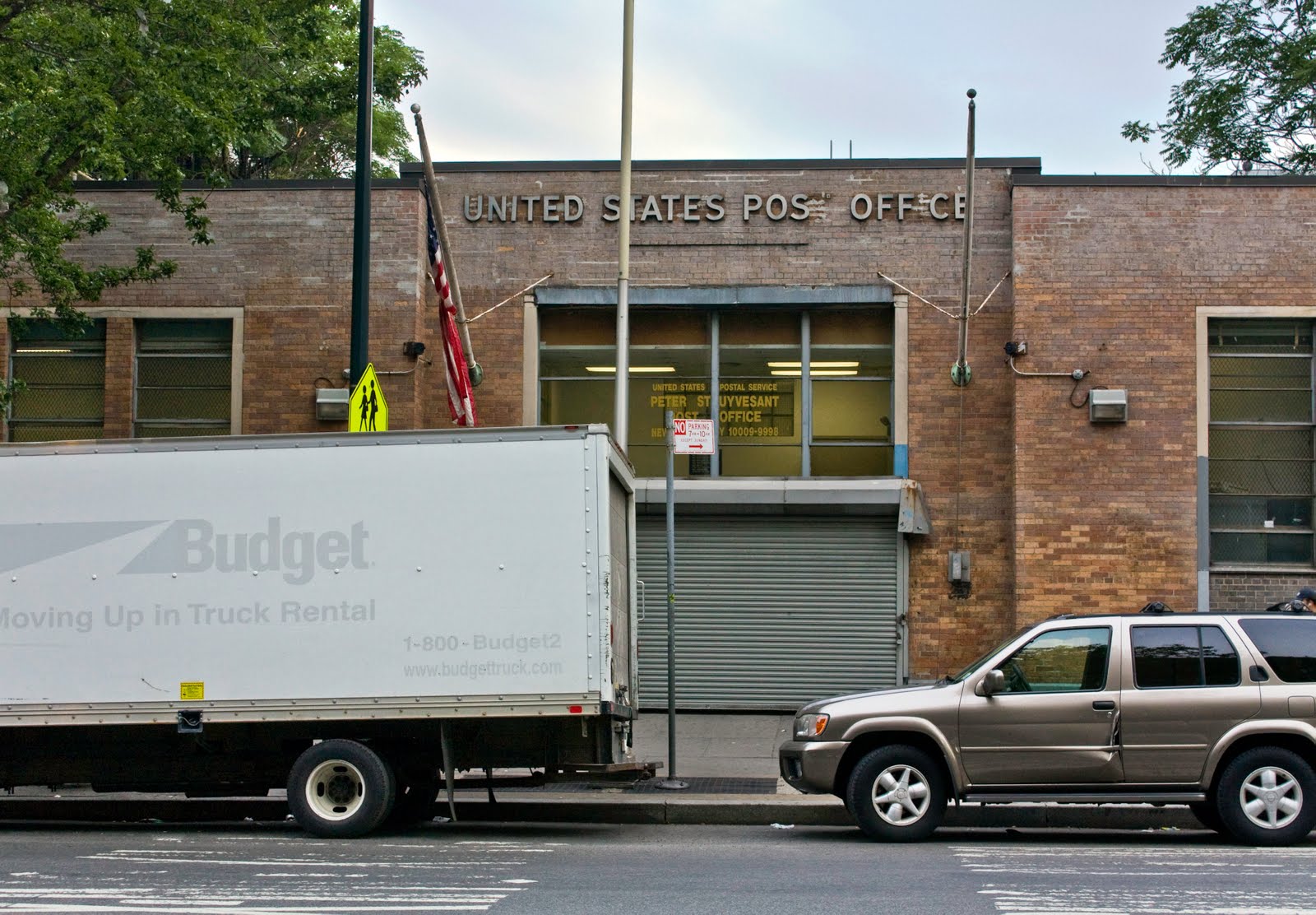
Mary Sargent © 2010 ………………….…………… ………………….. click to enlarge
I apologize for the erratic postings lately. As soon as my life gets less erratic, so will my postings. Rest assured, this Project will be done (if I live long enough), and some day, maybe soon, I will get to that block you've been waiting for.
Meanwhile, the Peter Stuyvesant Post Office is apparently badly run, if one can believe two complaints posted at Complaint.com. This is a fairly strange website, as it seems posting a complaint has no more effect than if you'd written it in your diary. Anyone up for submitting a complaint about Complaint.com?
Friday, August 06, 2010
East Village, 14th Street Between First Avenue and Avenue A

Mary Sargent © 2010 ………………….…………...........… ………………….. click to enlarge
This church began life in 1896 as Grace Chapel and Hospital, an Episcopal mission for Grace Church in the West Village. In 1943,it became the Immaculate Conception Church, a Catholic church. Do you know what Immaculate Conception refers to? Wrong! It's not the Virgin birth. It's that Mary was born without original sin. If anyone desires to see a baptism in this very church, you can find one right here.
Thursday, August 05, 2010
East Village, 14th Street Between First Avenue and Avenue A

Mary Sargent © 2010 ………………….…………… …….........…………….. click to enlarge

